6.302 Feedback Systems
Spring 2011
Instructors: James K Roberge, Byron M Roscoe
TAs: Chris BUENROSTRO, Joshua M Gordonson, Steven G Herbst, Itaru L Hiromi, Andrew P Lewine, William R Sanchez, Frank M Yaul
Lecture: TR11 (32-141)
Information:

Massachusetts Institute of Technology
Department of Electrical Engineering
6.302
Feedback Systems
Spring 2011
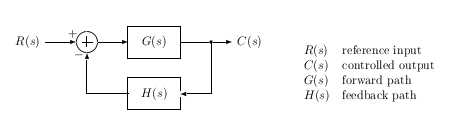
Introduction
Feedback Systems is quite possibly the most important class you will ever take. Everything needs feedback. You will never design an electronic or an electromechanical system that does not include a feedback loop, either explicitly or implicitly.
Every interface to the real world --- whether you are building a robot arm, a temperature control system, an audio power amp, or an RF synthesizer (the list goes on and on) --- needs to drive some kind of actuator --- a motor, a heater, a power transistor, or an oscillator. To make sure that actuator is doing the right thing, you need to measure the output (its position, its temperature, its voltage, or its frequency) and compare that measurement to what you meant to do. In other words, you need feedback.
Course Content
Introduction to design of feedback systems. Properties and advantages of feedback systems. Time-domain and frequency-domain performance measures. Stability and degree of stability. Root locus method. Nyquist criterion. Frequency-domain design. Compensation techniques. Application to a wide variety of physical systems. Internal and external compensation of operational amplifiers. Modelling and compensation of power coverter systems. Phase lock loops.
Laboratory
You will have four short lab projects and a design problem to do --- about one every other week --- ranging in subject from operational amplifiers to thermal systems. We hope you find these labs illustrative and informative.
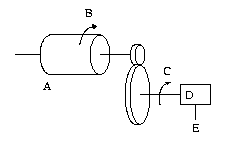
We start the term by studying a servomotor mechanism. There are many good reasons for using motors in these four labs (labs 1A, 1B, 1C, and 1D). Most of all, we believe that it is a valuable experience. In your careers as engineers, the systems you design and build will often interface to the real world with motors, actuators, and sensors of all kinds. We believe that these labs are an excellent introduction to this kind of design.
In the design problem you will have a choice among several projects.
Announcements
Re: Office Hours
Announced on 17 May 2011 8:58 p.m. by Steven G Herbst
6.302 Extra Office Hour -- 8-9PM Tuesday
Announced on 17 May 2011 12:55 a.m. by Steven G Herbst
6.302 Sample Finals Posted
Announced on 14 May 2011 3:34 p.m. by William R Sanchez
6.302 Final Exam Review
Sunday, May 15, 201112PM - 2PM, Room 32-141
Announced on 14 May 2011 1:28 a.m. by Steven G Herbst
MagLev Competition Results
Best Transient Response: 45ms -- Andy Goessling
Best Disturbance Ratio: 16.8 -- Drew Hilliard
Heaviest Object Lifted: 33.1g -- Joe Lane
Lowest Power Consumption: 0.65W -- Krishna Settaluri & Kes Yogeswaran
Largest Dynamic Range: 9/16" -- Joe Lane (http://www.youtube.com/watch?v=QKbwJV419dM)
Most Artistic: Nathan Salazar
Congratulations to these winners and all who completed the MagLev for their efforts!
Announced on 13 May 2011 12:31 a.m. by Steven G Herbst
